
Skin & beauty · 9 min read
Hair Loss and Ayurveda: Why It Happens, and What Actually Helps
By Lakshmi Harilela · 23 November 2026
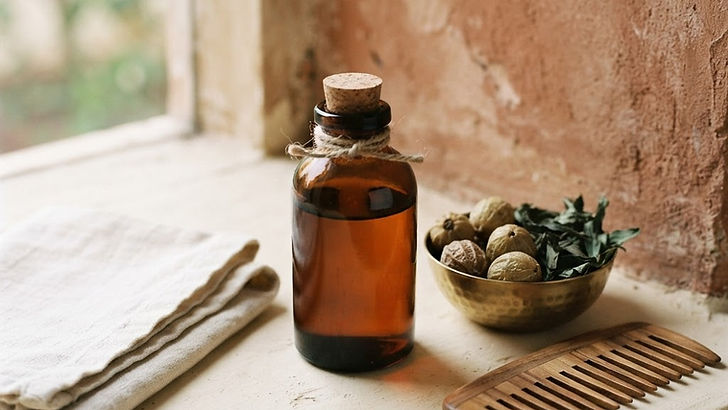
Hair thinning is one of the most common reasons people book a consultation in Hong Kong. The Ayurvedic view of khalitya, what the doshas have to do with it, and what genuinely helps.
Hair loss in Ayurveda is called khalitya, and it is read as a signal from the body rather than a fault in the hair itself. The short version: hair is nourished by rasa and rakta, dried out by excess pitta, and starved when the channels of the scalp are blocked. Settle the cause and the shedding usually slows. No shampoo regrows hair on a smooth bald patch, and any product that promises that is selling you something.
What the classical texts say
Ayurveda treats hair fall (khalitya) and patchy baldness (indralupta) as disorders of the head, in the same chapters as migraine, sinus problems and diseases of the sense organs. That grouping is deliberate. The scalp is not a separate cosmetic zone. It is the top of a system that depends on digestion, blood quality and circulation, and the texts assume hair problems begin somewhere below the neck.
Two tissues matter most: rasa, the first product of digestion, and rakta, the blood. Hair is described as a by-product of these tissues, which is why anaemia, poor appetite and long illness so often show up first as thinning hair. The third factor is the channel, srotas. If the fine channels of the scalp are blocked by ama, oiliness, dandruff or inflammation, nutrition never arrives, whatever you put on the surface.
The three forces behind thinning hair
Pitta: heat, inflammation and early greying
Pitta governs transformation, and bhrajaka pitta sits in the skin. Too much of it shows as an oily, sensitive, itchy scalp, premature greying, and hair that falls in small round patches. It builds with excess sour, salty and pungent food, alcohol, fried food, midday sun, and the particular strain of being permanently busy and slightly angry.
Vata: dryness, breakage and the post-illness shed
Vata is movement and dryness. When it rises, the scalp tightens, the hair shaft becomes brittle, ends split, and shedding increases in waves. This is the pattern after fever, after childbirth, after a crash diet, after months of broken sleep, and in the menopausal years. It is also the pattern of air conditioning and a diet of raw salads and iced drinks.
Kapha and ama: blocked channels and an oily scalp
Kapha is heavy, cool and sticky. In excess it produces oiliness, dandruff, scaling and a scalp that feels congested. Combined with ama, undigested food matter, it clogs the channels so that even good nourishment cannot reach the follicle. This is the pattern of late heavy dinners, dairy and sugar, and very little movement.
The honest list of causes
Ayurveda did not know about ferritin, thyroid antibodies or telogen effluvium, but it described the patterns they produce. In practice, most hair loss I see in clinic comes from a combination of:
- Low iron or ferritin, common in women and in anyone who eats little red meat
- Thyroid imbalance, underactive or overactive
- PCOS and other hormonal shifts, including after stopping the pill
- A shed two to four months after illness, surgery, childbirth or a crash diet
- Chronic stress and short sleep, which push hair into the resting phase
- Harsh daily shampooing, hot water, tight ponytails and years of traction
- Scalp conditions such as seborrhoeic dermatitis, psoriasis or fungal infection
- Genetic pattern hair loss, which Ayurveda reads as long-term depletion of rasa and rakta with rising pitta
This is why a proper consultation includes bloods. If your ferritin is 8, no oil, herb or shampoo will fix it. Correct the deficiency and the shedding often settles within three months.
What actually helps
1. Oil the scalp, not the hair
Warm a small amount of bhringraj or amla oil, part the hair in sections, and massage the scalp with the pads of your fingers for five minutes. Leave it twenty to thirty minutes, twice a week, then wash. The massage matters as much as the oil: it warms the tissue and moves circulation towards the follicle. Skip it during an active inflammatory flare.
2. Wash gently and less often
Two to three washes a week is enough for most people in Hong Kong. Use lukewarm water, dilute the shampoo in your palm, massage with fingertips and never with nails, and rinse longer than feels necessary. Daily washing with strong detergent strips the scalp, and the rebound oil production makes everything worse.
3. Eat for rasa and rakta
- Protein at every meal: eggs, fish, dal, paneer, tofu, chicken
- Iron with vitamin C: leafy greens, dates, black sesame, amla
- Ghee and good oil in moderation, which carry nutrition into the tissues
- Warm cooked food at midday, when digestion is strongest
- Less of: excess sour and salty food, alcohol, deep-fried snacks, iced drinks with meals
4. Sleep in pitta's window
The hours around 10pm to 2am are pitta time, when the body repairs tissue. Hair that is shed in handfuls is often hair that was never rebuilt, because the repair shift was cancelled. Ten thirty to eleven is the target, and it does more for hair than most supplements.
5. Use herbs, but not blindly
Bhringraj is the classical hair herb, amla supplies vitamin C and tannins, brahmi calms the nervous system, shikakai and fenugreek clean gently. The amla and brahmi preparations are in the apothecary, alongside a Kesh Sutram hair pack built on shikakai. Internal herbs for hair are usually given as part of a full prescription, after pulse and history, and are not appropriate in pregnancy or alongside certain medications. Do not self-prescribe a handful of powders from an online shop.
The shampoo I use, and what it can and cannot do
For scalp care I recommend the Khadi Natural Amla and Bhringraj Shampoo. Amla and bhringraj are the two herbs the texts return to for hair, and this formula cleans without the harsh detergent load of a supermarket shampoo. It is not a medicine and it will not regrow hair on a smooth, shiny patch where the follicle has gone. What it does is keep the scalp clean, calm and unblocked, so the hair you still have stays longer and breaks less.
How I suggest using it: wet the scalp, use a coin-sized amount diluted in your palm, massage for a minute, leave it for two minutes, then rinse with cooler water than you think you need. Two or three times a week, alternating with a plain gentle wash if your scalp is oily.
A four-week starting point
- Week 1: swap one iced drink a day for warm water, and stop washing daily
- Week 2: add two oil massages a week, twenty minutes before washing
- Week 3: get ferritin, thyroid and vitamin D checked if you have not
- Week 4: move bedtime thirty minutes earlier, three nights a week
When to book
If you are losing hair in patches, if your scalp is inflamed or itchy, if you have noticed widening of the parting or a receding hairline, or if the shedding has continued past three months, book a consultation rather than experimenting. We look at digestion, sleep, cycle, stress and bloods together, because hair is almost never only about hair. You can read how a consultation works or book directly. If you are not sure where you stand constitutionally, the dosha quiz is a reasonable first step.
⚠️ This article is for information only and is not medical advice, diagnosis or treatment. Hair loss has medical causes, including thyroid disease and iron deficiency, that need proper investigation. Speak to a qualified practitioner or doctor before starting herbs, and never use internal herbal medicines in pregnancy without guidance.
Know someone who needs this? Send it on.
WhatsAppThe journal, by letter
Slow notes, once a month.
Seasonal eating, new recipes and the rituals worth keeping — written by Lakshmi and sent from her own inbox.
Work with Lakshmi
If this raised a question about your own health, a consultation is the place to take it.
Ayurveda works alongside, not instead of, your medical care. I do not diagnose disease or replace your doctor.


